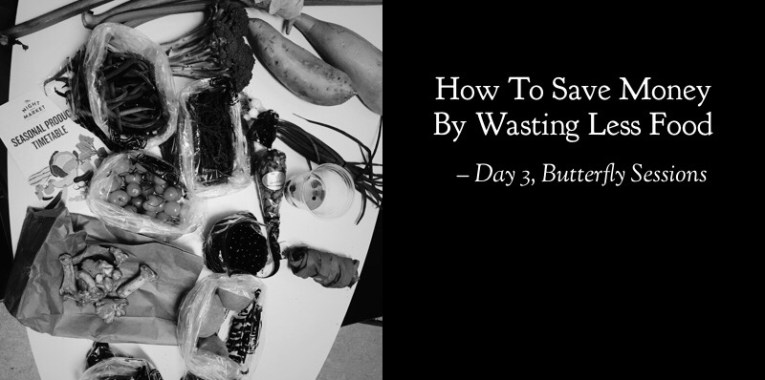
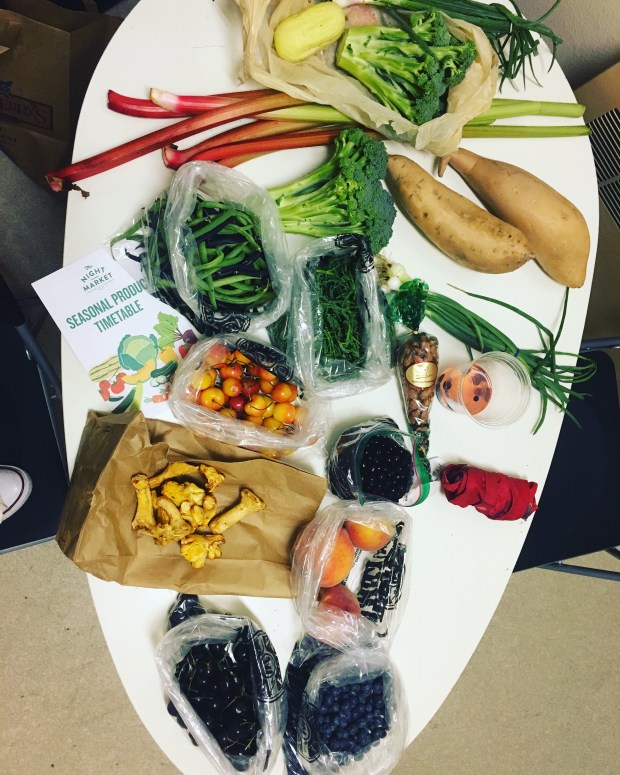
How To Save Money By Wasting Less Food

22 Days Of Blogging- Day 3

The tips in this post could potentially save you 40% on your food bill forever.

Wasting food is a common health coaching conversation because most people are spending a lot of money on their healthy food only to throw a large portion of it out.

Throwing away food is unfortunately the current norm in our society. About 40% of all food that is ever produced is never eaten, it is thrown away and wasted. Think on that for a moment. All of the energy that is spent to create food and almost half of it is destined for the landfill rather than the tables of people who it was grown for. On a personal level, the average individual is also throwing away about 40% of the food they purchase at the grocery store.

Since I have learned how to stop throwing out my fair share of food, I can tell you that using all of the food you buy without waste is a skill. It requires you to become food conscious from the time you are at the store to the time you are forced to deal with the leftovers.

Here are 5 ways that I keep food waste to a minimum:

  1. Plan your meals. Make a menu of what you’re going to eat for breakfasts, lunches, and dinners this week and then fill your pantry and fridge. Keeping a regular theme (i.e. Taco Tuesday) is a great way to keep your favorites on the menu and your fridge stocked.
  2. Keep a whiteboard note of what is available or possible to eat in the fridge right on the door. This is also a good place for family members to make requests and write down food items you will need for your next grocery shopping trip.
  3. Store your food properly. Veggies that are stuck in a plastic bag on the bottom of that drawer in the fridge often get forgotten. Instead, place them into a reusable airtight container and that will preserve their flavors and nutrients better. Most vegetables will only store for a few days so have a plan to use them or freeze them.
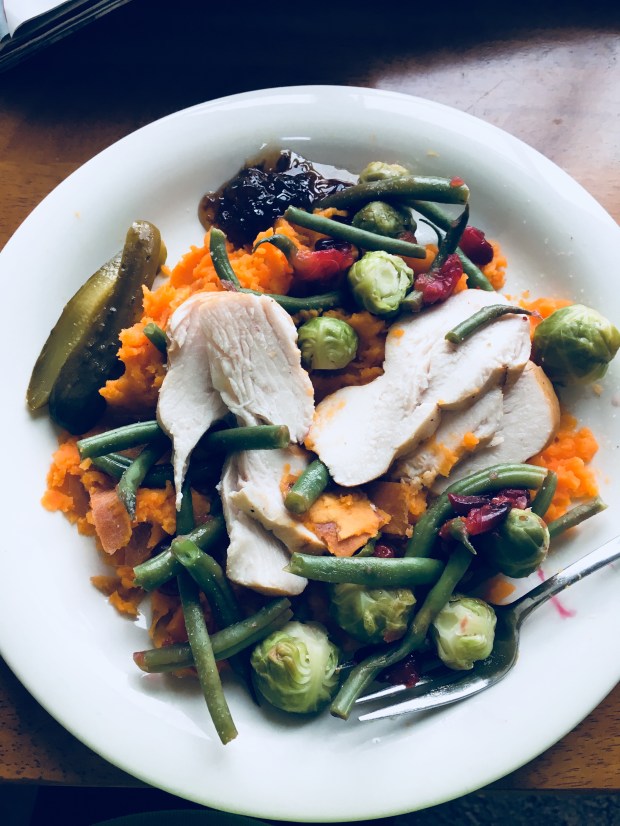
  4. Plan to eat leftovers. Cook once, eat twice. Put aside a few servings for later that week or in the freezer for anytime. It can be really helpful to make a few things in one cooking session so overall you end up spending way less time over the stove.
  5. Pick one day a week to clean out the fridge. This can also be when you challenge yourself to make a meal with only what you have in the fridge and pantry. Get rid of the stuff before it goes bad.

Reducing your food waste is a simple and smart way to save money. Imagine how different your food budget might feel if you were eating all of it.
Surviving The Holidays With Food Sensitivities

File Dec 08, 11 20 19 AM

21 Days of Blogging- Day 2.

Few things seem to bring out people’s food issues like sharing a meal at the holidays.

During this time of year you’ll hear about people gaining 10 pounds of ‘holiday weight’ as they gorge themselves on the lovely indulgence of traditional dishes that don’t always serve a healthy or healing body.

During these festive get togethers my sensitivity and avoidance to foods that contain gluten, dairy, sugar, some nightshades, and corn frequently feels like an issue or an inconvenience if I’m the only one eating that way.

If you would have known me several years ago I was the first one to the table as I sampled through everything the table had to offer and then go back for seconds. Family dinners were awesome.

Those awesome eating experiences changed when I quit eating gluten and dairy. People generally don’t have any idea how to modify their recipes (nor do I ever expect them to do so only for me) so unless I expose my digestive system to gluten and dairy I am left out from enjoying everything on the menu. My experience has often been that I will be able to eat the meat (when I’m eating meat) if it doesn’t have any weird spices or sauces and I can eat the veggies if they are not dressed with butter or cheese. It is a very limiting experience and if not planned for a major let down while everybody else is drooling over their decadent food and you are left with plain food.

  1. When possible, talk with the host beforehand about what is being planned for the menu and ask if you can bring anything and/or if they can set aside your portions without dairy and sauces containing gluten.
  2. Bring your own dishes or sauces and make enough to share. Your dish might be the one thing on the table you will eat.
  3. Be grateful. No matter if you can only eat one thing on the table, you can eat one thing. Enjoy every healthy bite while you share time with loved ones.
  4. Prepare to have other people feel bad for you because you are so fragile and limited and can’t indulge like they can. Ugh.
  5. Try to keep your manners and not be judgemental when people tell you how they know they would be much healthier if they gave up certain foods and then proceed to pile said foods on their plate, eat them up in front of you then complain about their indigestion and bloated bellies after dinner. Its an odd experience for me to watch and an exercise in holding my tongue.
  6. Prepare to not be able to have dessert. This one hurts. As a foodie, this one hurts. Bring your own, if possible.
  7. Remember why you are skipping the foods that cause angst in your body. Honoring your body with the best food possible will leave you feeling better in the morning.

When you face food limitations because of your health, you also get to witness how limited other people are in the same old food habits they don’t feel are necessary to upgrade.

Good luck keeping your food healthy this holiday season! We got this.

See you tomorrow.

Pam Dyer is a Holistic Health Coach who trains people with scoliosis and chronic illness how they can improve sleep, gut health, immunity, and brain function to live full and hurt less.  To book a consult with Pam please email:  butterflysessions@gmail.com  

Using Cannabis For Depression

File Mar 29, 12 40 41 PM

Talking about depression is tough. Even just writing about it right now is making my skin uncomfortable but I still feel compelled to get out that this is one of the most beneficial things that cannabis has helped me with on top of the chronic pain that I deal with because of ongoing health issues.

If you were to ask the people in my life to describe me they would use words like “bubbly, optimistic, happy, or funny.” Most people don’t know about my very dark side, the depressed one that dwells in a secret closet under a very heavy black cloud. I prefer not to share this part of me to the world. But the reality is that I do deal with depression and anxiety which is very connected to experiencing chronic physical pain and discomfort.

I have never taken prescription drugs for depression or anxiety but I have been using cannabis specifically for my scoliotic spine and experienced the added bonus of relieving my depression. When I look back I can see that I totally have been using cannabis during the blue times in my life, I just would never have admitted to being depressed at the time.

To be really honest occasionally I feel kind of guilty about whether I am using cannabis solely for pain management but also recreationally. I had always associated the getting happy part of marijuana use as recreational largely because that was its purpose as a recreational user until I got my medical cannabis recommendation. I mean, is it ok for me to use cannabis just to brighten my mood when I am feeling blue? The answer is yes. 

The compassionate (and logical) side of me has realized that it is totally ok and beneficial for using cannabis for the depression and anxiety. It kind of all goes together. Pain gets worse when you are depressed and stressed. I know that first hand. For me, depression has nothing to do with the fact that I have a good life and I am grateful for every single person, thing, and experience in it.

Cannabis is simply one tool that I use to keep the dark clouds parted so that I can see sunshine too. I also use regular exercise, a healthy diet, meditation, a practice of gratitude, journaling, and positive peers to keep my spirits lifted. Add cannabis to the mix and I become much more equipped to handle what this little body of mine is throwing at me on a daily basis.

There is no shame in saying you deal with depression or anxiety but it can feel that way when the person you are talking to either does not relate or is not open to listening to you talk about it. There is also no shame in saying that you use a non-toxic, natural plant with no risky side effects that not only relieves your pain but also keeps your spirit lifted so you can experience life on a happier level.

In fact, the more that we talk about depression the less power it will have over us and the more compassionate we can be to ourselves during times of darkness, we just might make it through.

Stay lifted my friends.

Pam Dyer is a Holistic Health Coach who trains people with scoliosis and chronic illness how they can improve sleep, gut health, immunity, and brain function to live full and hurt less.  To book a consult with Pam please email:  butterflysessions@gmail.com  

The Legal Washington CBD/THC Suppository Experience

File Oct 28, 10 49 01 AM

*NOTE: This is an independent, unsolicited review of a legal Washington product in stores now. 

There is only one cannabis suppository in the legal 502 retail marketplace brought to us by the good people at CPC in Seattle. I’ve been really waiting to try it because I’m super skeptical about the effectiveness of their 10mg/THC dosages.

I like to keep cannabis infused suppositories in my medicine cabinet as a method of managing back and body pain, pelvic cramps, sleeping issues, or anytime I can feel my body is really run down. I swear by them as one of the most effective ways to benefit from medical cannabis.

The challenge comes in being able to buy a good cannabis suppository. Before legal retail cannabis was set up in Washington and consolidated with medical, I was getting my suppositories in the former system from a reputable medical provider and eventually  learned how to safely make my own.

My former suppository experiences have involved using 50-200mg/THC doses with the effects being substantial in relieving pain, and helping me have restful sleep without a heady high.  I’ve only ever used ones made with coconut and whole plant cannabis concentrates, not a very solid product at most room temperatures.

The product I tried from CPC is made with two ingredients, shea butter and cannabis concentrate. From briefly talking to the gentleman who created them, I learned that they chose shea butter due to its ability to hold a form and still be bioavailable to people who are sensitive or allergic to other commonly used oils such as coconut, a personal favorite of mine.

The packaging was easy to read, allowed me to see exactly what I was purchasing, and was not messy to get into. Major bonus.

I also know that the cannabis oil they use is from a company who is conscientious about only using plant matter that was not treated with pesticides. This is a very important point for me.

I took a dose about an hour before bedtime and waited. In the past I would feel a warmth in my pelvis that would wash over my lower body and relax everything in about 15-20 minutes and depending on the dose put me into a restful sleep. After about 30 minutes I still felt nothing. The nagging ache in my hip was not softened or muted, it did nothing to help me sleep that night, plus I woke up just as sore as I would have any other morning.

Basically, taking this suppository felt like a total joke to me, not noticeably beneficial at all. Because of state laws on dosage control, this product is limited to provide 10mg/THC. Weak.

When using it, I appreciated that it mostly held its form during insertion even being stored at room temperature. I would definitely suggest putting it in the fridge or freezer before use to make it a little more firm for easy insertion.

The bottom line for me was that the overall experience was weak and totally overpriced. I certainly can’t blame the company for not putting out a higher dosage when they are limited by laws. More than anything I appreciate that they have stepped up to put out a quality medical type product in a recreational market.

However, would I ever buy it again? Probably not until the dosages significantly increase. I would rather go through the effort to make my own higher dosed recipe with reputable concentrates and coconut oil at home than ever waste my budgeted medical cannabis money on this particular product again.

I have talked to only one other person who has used these and they said they did feel slightly less achy the next morning when using it before bed but did not have a significantly therapeutic experience.

There must be somebody out there finding them helpful though because they have stayed on the market for a while now. If there is ever a better product to come out in the legal market, I will let you know.

Peace.

Pam Dyer is a Holistic Health Coach who trains people with scoliosis and chronic illness how they can improve sleep, gut health, immunity, and brain function to live full and hurt less.  To book a consult with Pam please email:  butterflysessions@gmail.com  

CBD Turmeric Bone Broth

2015-11-01 12.17.49

I spend a lot of energy promoting and consuming a plant based way of eating but that conversation shifts when we start talking about bone broths.

I swear by taking bone broth for improving immunity, moods, brain function, digestion, and reducing inflammation in my body. A good bone broth is full of beneficial minerals, gelatin, collagen, glutathione, glucosamine and packaged in a form that is easy to swallow and absorb.

I make my own because it is way less expensive than store bought, I can make it in bulk, and mine is always better.

About once a month I will cook a whole organic chicken, debone it, and put the carcass and any parts that won’t be eaten into the crockpot and brew a big batch of bone broth.

Once made it can be used in all sorts of recipes or easily frozen for later use. One of my favorite ways to take it is simply to sip it plain with a little hot water, salt, and pepper.

During this month’s batch I decided to try infusing it with a high CBD (cannabidiol) cannabis kief and powdered turmeric. The results were great. I’ve had it first thing in the morning, in the middle of the day, and for dinner and no matter what it feels like I have done something good for myself.

CBD Turmeric Bone Broth

-bones and scraps from 1 organic chicken

-1T apple cider vinegar

-1 gram kief

-2T turmeric, or more

  1. Put the chicken parts in a crock pot and fill to about an inch from the top.
  2. Add apple cider vinegar and let sit over night on low. (This helps to bring nutrients out of the bones.)
  3. Remove all chicken parts and separate the liquid through a strainer.
  4. Return the liquid broth to the crockpot, add kief and turmeric, and let sit on low overnight.
  5. Use immediately or freeze individual portions for later use.

Notice that I did not decarboxylate my cannabis, which is something you may want to do before you add it to the broth. I didn’t feel the need to do so with this recipe or this particular strain of CBD (cannabidiol) rich kief.

If you are new to taking turmeric, feel good about adding generous amounts as it is beneficial for reducing inflammation, improving digestion, lowering blood sugar, and increasing bile production. It is mild in flavor and a bright yellow color that brings extra life to food.

Good health and peace to you.

Pam Dyer is a Holistic Health Coach who trains people with scoliosis and chronic illness how they can improve sleep, gut health, immunity, and brain function to live full and hurt less.  To book a consult with Pam please email:  butterflysessions@gmail.com  


Foodie Tips For Eating More Plants And Less Animals

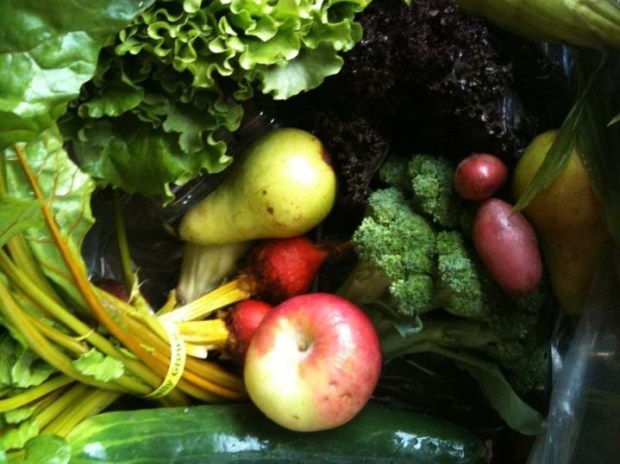
Vegetablebox

I woke up one day this summer with a different disposition. Change was definitely in the air and it really hit me when I went to the grocery store and got a nauseous feeling in my stomach walking through the meat section. Ugh.

Oh yes, I’ve had this feeling before. Suddenly the idea of eating animals completely grosses me out and I must adjust my food to being plant based. In the past I have quit eating all animal products for experimental and environmental reasons so when this feeling hits me now its not so bothersome because I regularly transition in and out of a vegan diet and would say 90% of my food already comes from plants.

Eating mostly plants takes practice because many of us have been raised to eat animal products as the main source of protein in each meal. Not only that the majority of food choices when you eat out are animal based: Bacon and eggs, hamburgers, hotdogs, grilled cheese, salmon dinner, steak and potatoes. If you are striving to eat less meat and more veggies, the following list is for you.

Plant-Based Foodie  Tips:

  1. Eat the Rainbow. Fill your plates and smoothie glasses with colorful plants at each meal (green, white, red, orange, purple…). Each group of colors brings to the table a different set of vitamins and minerals essential for healthy body function. Variety is key to achieving balance while avoiding food boredom.
  2. Plan for your meals ahead of time so you never find yourself starving and without an idea of what to eat until your plant palette is expanded and not eating animals as a staple becomes easier. Think about what you want to eat for breakfast, lunch, dinner, and snacks this week and stock your fridge and pantry with those foods.
  3. Prep your fresh vegetables to be used for snacks when you bring them home so they will be readily available to grab anytime. Spending 20-30 minutes to prep and cook your food every few days can save time and money, if you eat the food.
  4. Eat whole fruit. Make sure you are getting the fiber by eating the whole fruit and skipping the fruit juices or watering them down to reduce the high sugar content.
  5. Be hydration conscious. Try flushing your kidneys and your digestive system with water and lemon juice upon rising in the morning for a month. Pour your water the night before to set you up for success. Eating more plants equals more fiber that needs to gets moved through you. Aim for a good 1.5 liters of fresh water per day.
  6. Freeze or juice foods you won’t likely be able to eat before they go bad.
  7. Stock up on protein staples like hemp, rice, beans, lentils so you can put together a meal in minutes.
  8. Boost your gut microbes with probiotic rich fermented foods such as sauerkraut, miso, kimchi, kefir, etc. or alternatively take a regular probiotic supplement.
  9. Explore new vegetables and different ways they can be eaten. Most people will tell you they hate Brussels sprouts but many have never tried eating them raw before, its like a totally different food.
  10. Emphasize the whole food part of a plant based diet. You can be an unhealthy vegan by eating processed food products and not enough actual vegetables, it happens all the time.
  11. Stock up on plant fats. Think nuts, seeds, avocados, olives…foods that add texture and balance to the meal to provide long lasting energy.
  12. Treat yourself and explore the vegan restaurants in your area for new inspiring recipes and innovative ways to eat plants.
  13. Think about being the kind of plant based foodie who leads by example. There is nothing worse than that chick at the party going on about her superior way of eating but when she could be changing minds sharing amazing food.
  14. Put herbs on everything. Not only are they cleansing to your organs, herbs add the flavors that will make you forget that you don’t have delicious animals on your plate. Condiments are your best friend at the dinner table.
  15. Don’t limit yourself. This is not a restrictive, calorie-counting diet that gets you nowhere. Eating a plant based diet is a conscious choice to feed and nourish your body on a cellular level so you function at peak performance.
  16. Ask for the Vegan menu when you go out to eat. More and more restaurants are accommodating this ‘trendy’ demographic and the more you request it, the more they will serve it.
  17. Pat yourself on the back for being a conscious human on this planet.

The Positive Sides Of Scoliosis

Scoliosis2017

Scoliosis is bleak, every single part of it. If you are somebody who is inflicted with this challenging health condition you already know that living with a twisted spine can be scary, daunting, defeating, debilitating, and lonely. I feel all of that.

Since age 12 I have been repeatedly told I need surgery and have been prescribed and given samples of pain killers, muscles relaxers, and anti-inflammatories because of my scoliotic spine. I was once told by one doctor never to hang and told by the next to hang everyday. I have spent more time than I care to count wasted in physical therapists and specialists offices who did nothing for me besides tell me to keep doing what I am doing with pilates, yoga, and as a fitness trainer. They like to tell me that my spine will get worse with each aging year, until it eventually crushes my heart and internal organs and potentially collapses on itself. Like I said, bleak.

Scoliosis is much more than just a twisted spine. It is a neuromuscular disorder that may also manifest with other health conditions such as digestive disorders, muscle spasms, depression, anxiety, migraines, etc.

I put a lot of effort into the function of my spine and have since I was a teenager because I realized at an early age that I would always have to be mindful of my special back, it was never going away. I think about how I want to move as I age and move accordingly. More than once I have completely changed my livelihood, activities, and/or my food in order to manage it holistically without surgery or prescribed medications.

One of the toughest things about scoliosis is how lonely it can be. I have a lot of energy and rarely ‘complain’ about my back pain and focus on healthy things so on the outside it looks like I am a super health nut doing just fine with my spine. People don’t see the pain or discomfort that I am generally feeling because I keep it to myself. That’s no good.

June is Scoliosis Awareness Month

What is the positive side of Scoliosis?

  1. I’ve become very in tune with my body. Pain, discomfort and constantly needing to think about standing straight or straightening your clothes will do that to a person. On another level, when I’ve tuned in with with meditation and exercise I’ve been taught by my body how to cope and move through the world.
  2. I’ve been forced to be a ‘healthy person’ to function. Living a healthy lifestyle is not an option like it seems to be for most people and it can be really tough to be the only one at the party not drinking booze or eating sugar. But hey, you’re at the party! While it is tough, living healthy is a good and positive thing to keep as a priority, always.
  3. I look at body image much differently. When I am able to embrace myself as different I am also able to let go of what I think I am supposed to be and love who I am, imperfections and all. I tend to be very grateful for all I can physically do no matter how small.
  4. My spine contributes to me being highly sensitive, empathic, and wise. I can’t explain why but it just does. Spiney senses.
  5. I’ve become a powerful warrior of chronic pain with special strengths and coping skills that makes me strong enough to handle not only my own pain but also help others handle their pains. My spine is the reason that I started teaching fitness as a teenager and the reason that I went to Institute of Integrative Nutrition in 2010, I have a deep desire to help people feel well.

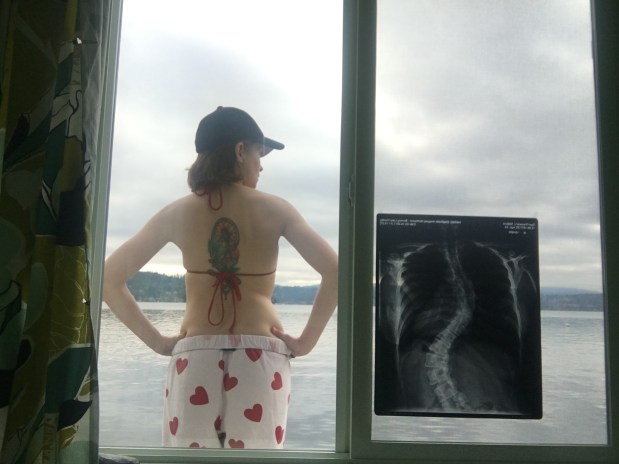
I am participating in Scoliosis Awareness Month by writing this and sharing a picture of me beside an X-ray of my spine. Funny, it was much harder to post a picture of my bare back than to post a picture of my X-rays. I worked through it.

Sending out much love and double hugs to those who live with or support somebody with scoliosis.

Pam Dyer is a Holistic Health Coach who trains people with scoliosis and chronic illness how they can improve sleep, gut health, immunity, and brain function to live full and hurt less.  To book a consult with Pam please email:  butterflysessions@gmail.com  

Sweet Potato And Leek Ginger Soup

With a shift in the seasons from winter to spring brings an attention to a new menu of local fresh foods. In the Pacific Northwest leeks, garlic, baby greens, peas, radishes, and rhubarb are just a few of the exciting seasonal ingredients worth adding to your menu. With that in mind I bring you my latest soup recipe that is very easy to make, delicious, versatile, and really good for you.

I recently discovered a simple way to use fresh ginger to create a broth and have since been creating different versions of this soup loaded with beautiful colors and packed with nutrients. The ginger and garlic add a nice spice and serious immunity boosting qualities. The abundance of vegetables provides your digestive system with a healthy serving of fiber.

Leeksoup2

Sweet Potato and Leek  Ginger Soup

4 inch piece of ginger, scrubbed and thickly sliced

2 leeks, chopped

1 lg sweet purple potato, cubed

3-4 cloves garlic, chopped

2-3 carrots, chopped

4 stalks of celery, chopped

salt and pepper

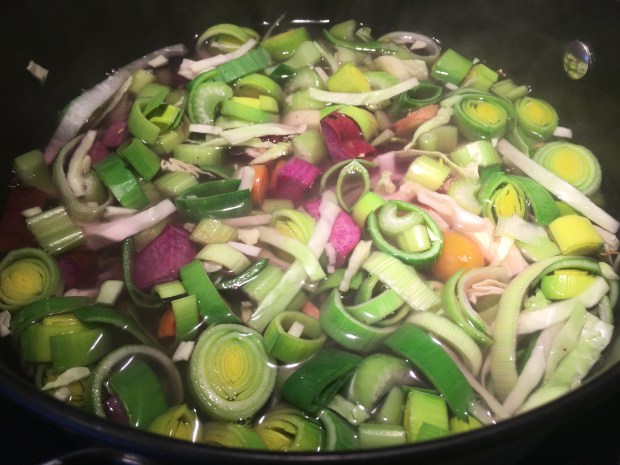
  1. Put the ginger in a large pot of hot water and and simmer for about 20 minutes while prepping the other veggies. Your option here is to remove the ginger before adding the rest of the ingredients, be hardcore and eat the ginger in the soup, or pick it out as you eat.
  2. Add all other ingredients to the ginger broth and simmer for about 20 minutes.
  3. Serve immediately and store leftovers in the fridge for about 3 days or freeze for future quick meals.
Leeksoupjar
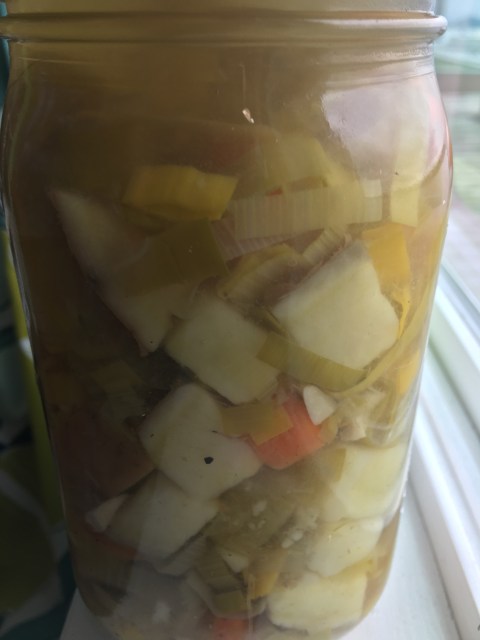
This batch of soup was made with white sweet potatoes.

Cheers to a happy and healthy spring season!

Pam Dyer is a Holistic Health Coach who trains people with scoliosis and chronic illness how they can improve sleep, gut health, immunity, and brain function to live full and hurt less.  To book a consult with Pam please email:  butterflysessions@gmail.com