Seven Years of Weed Over Pills

Would you believe it has now been over 7 years that I have been using medical cannabis over pharmaceuticals?  It’s kind of a big deal and here are seven reasons why it has been so significant for me.

1. No Negative Side Effects

For the past 7 years I have missed out on the groggy, uncomfortable feelings of side effects that I was experiencing with prescribed medications for pain and inflammation.  I’ve heard enough first hand stories of people who have been using the very drugs that I was being prescribed seven years ago to know that I made the right choice to stop them and find something else. Each year that I am able to avoid pharmaceuticals and their compounding negative side effects on my body is another year that I am able to enjoy a better quality of life and focus on health.

2. Adventures in Cannabis

Over the past seven years my choice to create a long term pain management plan using pot over painkillers brought me an unusual education about the plant and entry into a thriving unregulated medical cannabis scene that led into this current regulated adult use industry. I am blessed to have also gained professional experience in the cannabis industry doing everything from content creation, blogging, social media, speaking, networking, events, sales, trimming, garden work, lobbying, and protesting.

3- Multiple Symptoms Helped With One Plant

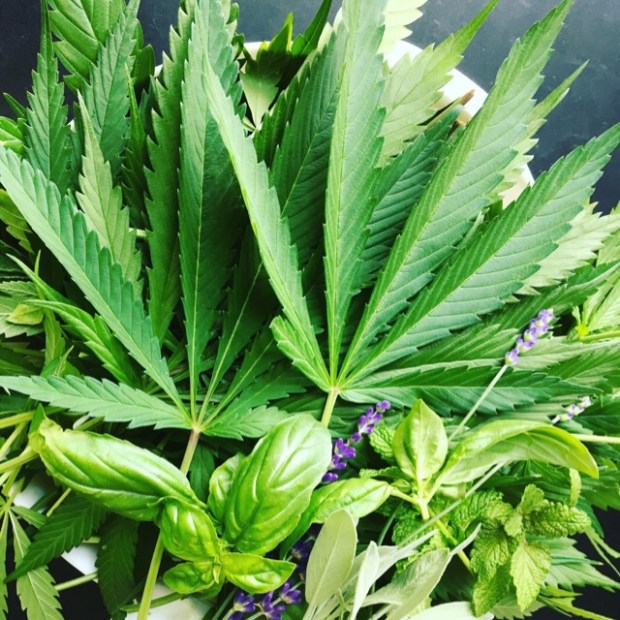
7 years of using one single plant, cannabis, to regulate my body’s homeostasis.  I do use it multiple ways for multiple symptoms (pain, inflammation, depression, anxiety, sleeplessness, migraines) but whether I apply it topically or put fresh leaves in my smoothies it is all coming from various strains of the same non-toxic plant.

4- Cannabis Helps Me Focus On My Health As A Lifestyle

7 years of working on my health with a focus on prevention, nutrition, and happiness. I have always been a health centric person but having an alternative method to manage my chronic health conditions has opened me up to different options and allowed me to find helpful treatments like acupuncture, Bowen, and the Scoliosis Activity Suit. Cannabis has definitely helped me to positively manage my chronic condition and significantly slow progression.

5- Seven Years Of Paying For A Medical Cannabis Authorization

You didn’t think this list would all be flowers did you? I bring this up to shed light on the current system for patients in Washington State. For the past 7 years I have annually been going to a doctor and paying for them to write and process a medical cannabis authorization.  My initial regular doctor wouldn’t even talk to me about it. The state of Washington has been so backward that when they implemented adult legal use they failed to upgrade and include a functional system for supplying medical cannabis to patients. Having to maintain my authorization and also register with he state so that I can have some arrest protections, grow my own, or get a weak discount at some pot shops for non-medical grade products has not been helpful or adequate for filling my medicine needs. I look forward to sharing and supporting fixer bills to medical cannabis in Washington State with you as they come along.

6. Growing My Own

For the past 7 summers I have been utilizing the rights provided to me by my medical cannabis authorization and grown my own. I have to say that experiencing the plant from a gardener’s perspective has given me much insight into how I can use it. Growing my own cannabis has allowed to experience the health benefits of gardening, consume it raw in my diet, learn how to harvest/dry/cure, and experience how to turn this plant into therapeutic tinctures, topicals, and edibles, etc. Knowing how to do all of that has been incredibly helpful in dealing with the lack of products in stores and my MMJ budget. However, having such a small plant limit is inadequate for filling my needs. WA-wa.

7. Learning To Be NORML

It was brought to my attention at this week’s Norml Women of Washington meeting in Seattle that even after 5+ years into us having ‘legalization’ in this state, there are still 600,000 people per year being arrested for marijuana possession in this country. When I hear stats like that I am motivated to get more involved in educating lawmakers and others in my community to end the social injustice that is wrapped up with cannabis.

7 things I would say to myself 7 years ago…

1. Take it slow.  At first I thought I had to feel high for it to be therapeutic. The higher the better. LOL.

2. Unless directed by your doctor to use high doses, consume as little as you need rather than consuming a lot to see how much you can tolerate.

3. Get a good flower vaporizer and use it more than smoking it when possible. I say this because I have often found vaping over smoking flowers to be the most beneficial for immediate relief of ending or at least muting a migraine headache.

4. Try not to lick the spoon too much when you are making edibles. You might get too high and that might be uncomfortable for a few hours.

5. If you ever take too much cannabis and feel too high, you are still going to be ok. Sip on some lemon water while doing something that helps you feel calm.

6. Stay low key about your cannabis medicine use but share your knowledge as often as appropriate. Don’t be shy about sharing your story if it might help somebody else have a different option that may benefit their health too.

7. Grow your own and expand your gardening knowledge from those who can not only grow impressive cannabis but also their own organic fruit and vegetables.

Here is to seven more, as needed.
Tips For Growing Raw Cannabis In The Vegetable Garden

image

As cannabis legalization slowly spreads around the world, more people are taking advantage of being able to grow small amounts of medicinal or personal recreational marijuana in their private gardens.

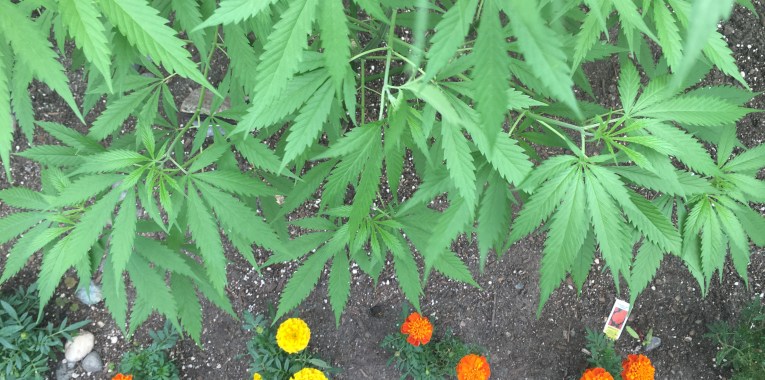
Growing cannabis in your backyard garden is a special thing. For the past several years I have been growing my own small amounts of medical cannabis outside in the vegetable garden during summer season. Learning as I grow this unique plant has been fascinating and challenging as something that I do to take charge of my health needs.

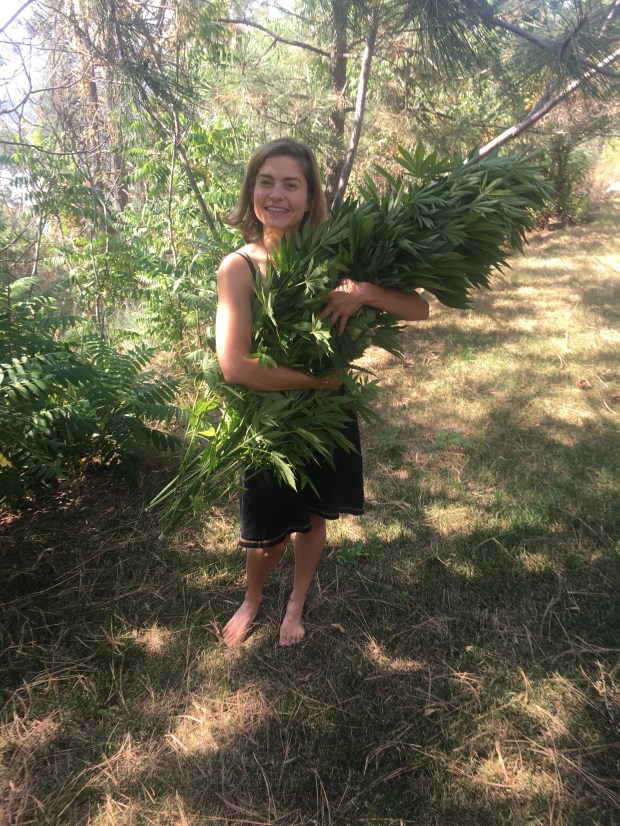
I grow cannabis with the intention of eating leaves off of them all season and then harvesting a portion of the buds during the end of the plant’s life. Yes, I eat my plants.

While you can find thousands of hot tips about growing cannabis, I have created for you a simplified a short list of things I do to successfully grow and eat off my plants until harvest time.

  1. Plant herbs and low growing root vegetables along borders and throughout the garden that will detract pests and feed nutrients to the soil.
  2. Let the soil dry slightly between waterings. This promotes stronger root growth as they reach out seeking water when the soil gets dry enough. Stick a moisture reader in the dirt to monitor how much water is needed. Watch the leaves, when they droop they may need a drink and when they are reaching up for the sky they are likely full enough.
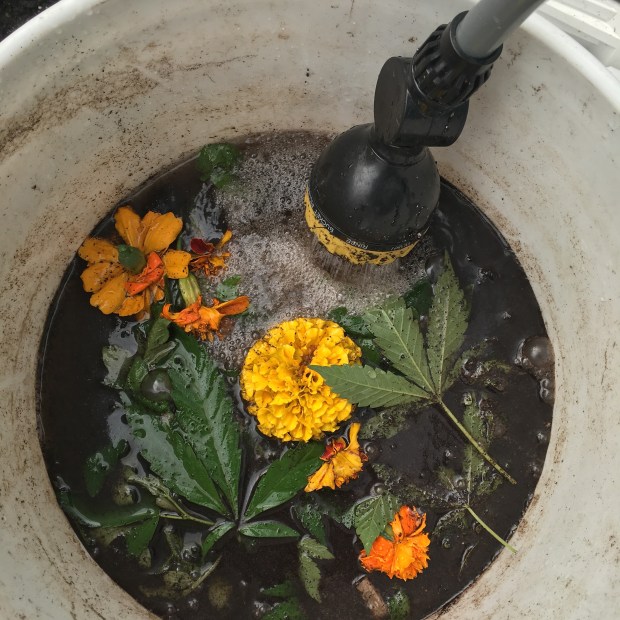
  3. Feed your garden once or twice a month with probiotic organic teas to feed nutrients to the soil and roots. I make teas with powdered kelp, bokashi, cannabis leaves, flowers, molasses, etc…natural ingredients. Because I am eating my plants, they are never grown with the use of pesticides or chemicals.
  4. Defoliate around the new moon when the plant’s growth is concentrated on the roots. Take leaves near the bottom to increase airflow and the big water leaves creating shade. Taking off about 25% of the leaves off increases nutrient flow to forming flower buds without stunting the plants growth. Note that the biggest reason that you are defoliating is so that you can eat the leaves! Get them processed and stored in the fridge right away for fresh consumption.
IMG_1912
Organic compost tea.

5. Look at your plants everyday. I’ve been told this by more than one cannabis grower and while it seems overly simplistic, I would say that it is one of the most important tips for maintaining a healthy garden. Talking to your plants while you are spotting for pests, broken limbs, and problems as early as possible really allows for quick action to keep the growing season fruitful. On the other hand, part of the beauty of growing outdoors is that mother nature will look after your plants if you ever really have to leave them for a day or two.

Before you go out there and start planting Kush in with the broccoli, make sure that you are up on the local marijuana laws in your area. If you find out that you are not able to grow cannabis plants in your garden, the next step is to contact your legislators and ask them to support cannabis legalization and homegrown in your area. www.norml.org

Before we know it, with a little more work, gardening cannabis with vegetables will be normal.

Pam Dyer is a Holistic Health Coach who trains people with scoliosis and chronic illness how they can improve sleep, gut health, immunity, and brain function to live full and hurt less.  To book a consult with Pam please email:  butterflysessions@gmail.com  

5 Ways Cannabis Can Help Chronic Back Pain

Chronic back pain is a condition like no other.  It’s a horrible ailment, actually.

I am one of those people who will always have issues with my spine. While I have been dealing with this stuff since I was a child it wasn’t until my very early 20’s when every doctor I saw started freely prescribing me synthetic drugs to manage my spinal condition.

I’ve tried to avoid taking too many synthetic pills too often because they always end up making me feel like crud, they mess up my digestive system, I don’t ever want to be addicted to them, and the idea of having to take them from now until I die as a way to cope with pain is not a future I am about to roll over for. There are better options to consider.

When I first explored using cannabis as part of my long term pain management I honestly thought that it just worked by acting more like a mental mask or a distraction from the pain. I didn’t fully understand how beneficial cannabis would be for managing the enormity of my chronic spinal condition. Turns out a lot of people I know still believe that cannabis only provides a happy distraction for pain, so, for you I write the following… 

5 Ways that Cannabis Helps Manage Chronic Back Pain:

1) Cannabis is a natural pain killer. Cannabis doesn’t just mask pain or distract you from it, it works with your body to relieve physical pain. One of the biggest plusses of using cannabis (for me) has been the pain relief without the unpleasant synthetic drug side effects or the potential risks with long-term use of synthetic medications. When you’re looking at a potential lifetime of chronic pain, you tend to take the  long term side effects of pain medication very seriously. 

2) Cannabis acts as an anti-inflammatory in the body. Having aches and pains caused by inflammation is a miserable experience and over time can negatively impact your overall health. Cannabis brings inflammation down to relieve pain and discomfort. Ideally, your pain management program will also be able to find what may be triggering inflammation in your body so you can address it from all angles.

3) Cannabis acts as a natural muscle relaxer and suppresses muscle spasms. Back spasms take chronic pain to a whole new level. I used to take muscle relaxers regularly to deal with muscle spasms but now that I have been taking cannabis regularly, muscle spasms and super sore overactive back muscles hardly ever happen.

4) Cannabis calms anxiety. Experiencing chronic pain creates anxiety, stress, and tension in the body. The anxiety, stress, and tension in the body create more pain thus building a vicious cycle of pain that never ends. Using the right strain of cannabis can significantly reduce or eliminate anxiety altogether by calming down the body and nervous system. Once you break the cycle of anxiety from creating stress and tension in the body, less pain will follow.

5) Cannabis helps to lift the depression that can come with chronic back pain. Being in pain every day and dealing with a debilitating back condition is one of the most challenging things a person can go through and there are predictably going to be dark spells along the journey. Pain can create a physical depression and depression can create more physical pain. Cannabis can lift the depression that will benefit not just your body but also your mental health.

Cannabis: The pain-relieving, anti-inflammatory, muscle relaxer that also acts as an anti-anxiety and an anti-depressant. One plant working naturally and synergistically in the body to heal, calm, and create well-being.

Pain is supposed to be one of those things in our body that is there for our benefit. It is our job to listen to what it has to say,  respect it, and do what is necessary to relieve it in the healthiest way possible. Cannabis is one effective option and worth considering if you are somebody dealing with chronic back pain.

Peace.

Pam Dyer is a Holistic Health Coach who trains people with scoliosis and chronic illness how they can improve sleep, gut health, immunity, and brain function to live full and hurt less.  To book a consult with Pam please email:  butterflysessions@gmail.com  

Becoming An American Immigrant In 2017

File Oct 19, 11 32 46 AM

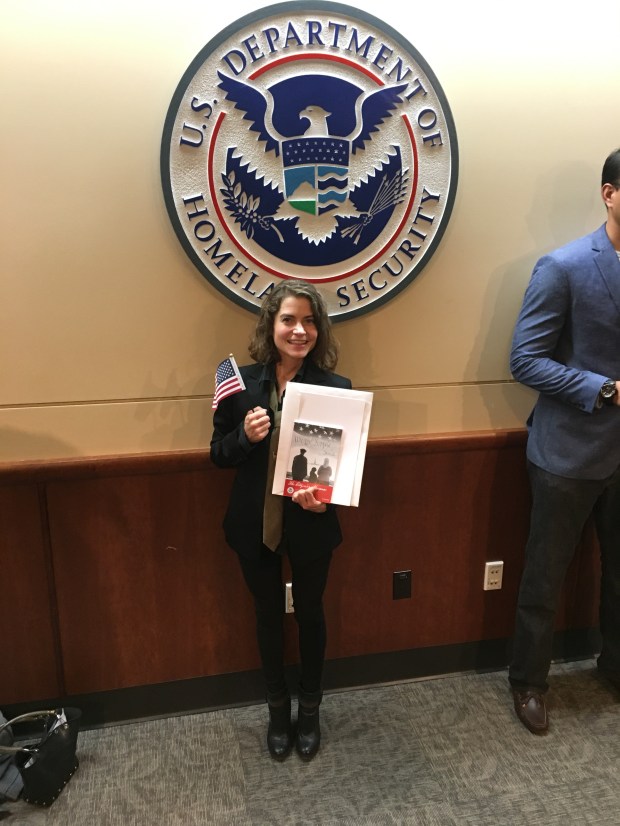
This week I proudly became an American citizen. They told me at my oath ceremony that it is my right to pursue happiness and that is what I plan to do. Up until now I haven’t talked much about the fact that I am an immigrant. I’ve lived in the US for twelve years and while I may have only moved across the Canadian border it has been a major shift in my world.

When I first moved here George Bush was president and performing shock and awe in the middle east. Moving to a place where you see a military presence everywhere including overhead from a place where you rarely see military is a really crazy feeling. Mildly unnerving at first, but you do somewhat get used to it. Same with the number of guns that people have either in their house or on them at all times, they take the right to bear arms very seriously here and that was a major culture shock for a Canadian farm girl that had never held a gun until she moved to America.

Moving from a country that provides health care to everybody to a country where people regularly go bankrupt and lose everything because they get sick and cannot afford the costs of their medical bills- that makes me uncomfortable on every level. I don’t dare get sick here even if I have insurance and am certainly proactive in making healthy choices to prevent anything worse than the chronic conditions I already have that they can’t cure.

I started reading food labels here and noticed that the ingredient lists are different. There seems to be a lot more ingredients and additives in the food.  Since moving here I either become acutely aware of or actually developed sensitivities to gluten and dairy. I don’t dare eat things with gluten and dairy anymore. On the bonus side, food is way less expensive than in Canada.

Obesity is a real thing here. One of my first times going to a county fair, I experienced my own kind of shock and awe witnessing the excessive amount and size of the food they were serving and the size of the people eating that food. Before moving here I had been working in a health bubble of sorts as the Fitness Manager of two women’s only clubs in Vancouver, BC personal training, teaching classes, and running boot camps on the beaches. Seeing such blatant obesity and obvious imbalance was a major culture shock to me. I adjusted by personal training outdoors, out of my garage studio, and improving my home cooking skills to avoid the ridiculous portions of low quality or low nutrient food served everywhere.

What is next for me now that I am a citizen of the country I’m living in? Why not start with free speech? I have a lot to say and this blog is one of the ways that I plan to practice that right. I want to spread wellness, self-health awareness, and positivity on a much larger scale.

I want to share the holistic options available to other people like myself who are seeking natural ways to manage long term health issues. One of these options that I have been using for my chronic pain, muscle spasms, and migraines is medical cannabis. Instead of taking multiple pharmaceutical pills I have one  non-toxic medicine I have a pain reliever, anti-inflammatory, sleep aid, anti-anxiety and antidepressant. One unique way that I use this plant is eating it like a vegetable. I juice the fresh leaves or put them in my smoothies. I can’t wait to share this stuff with you!

I also am a huge fan of hemp. When I was learning about the nutritional and medicinal benefits of cannabis leaves I learned about eating hemp that doesn’t contain THC. This plant has the perfect ratio of omega 3, 6, and 9 for the human body. Plus it provides easily digestible protein and fiber. I have a lot of healthy recipes and ideas to share with you. You may have already noticed that every recipe I post has hemp in it, that is intentional. Check out this Blueberry Hemp Cake

I am a healthy food advocate. I started volunteering for a local food organization that feeds those in need with the less perfect but perfectly edible food that doesn’t end up in the grocery stores. They have a number of programs that help feed hungry children in the community, and that is really important to me. I would love to make it possible for every child in this country to have access to healthy food even if their parents cannot provide. That is my American dream.

Oh, and one more thing. When I told people that I had applied for my citizenship most of them asked me why. The simple answer…President Donald Trump. Not being able to vote in the last election really bothered me and I vowed to be a voter in the next one. I feel connected to this country and although it is certainly not perfect, its optimistic ideals move me.

Thank you for sharing this journey with me.


The Positive Sides Of Scoliosis

Scoliosis2017

Scoliosis is bleak, every single part of it. If you are somebody who is inflicted with this challenging health condition you already know that living with a twisted spine can be scary, daunting, defeating, debilitating, and lonely. I feel all of that.

Since age 12 I have been repeatedly told I need surgery and have been prescribed and given samples of pain killers, muscles relaxers, and anti-inflammatories because of my scoliotic spine. I was once told by one doctor never to hang and told by the next to hang everyday. I have spent more time than I care to count wasted in physical therapists and specialists offices who did nothing for me besides tell me to keep doing what I am doing with pilates, yoga, and as a fitness trainer. They like to tell me that my spine will get worse with each aging year, until it eventually crushes my heart and internal organs and potentially collapses on itself. Like I said, bleak.

Scoliosis is much more than just a twisted spine. It is a neuromuscular disorder that may also manifest with other health conditions such as digestive disorders, muscle spasms, depression, anxiety, migraines, etc.

I put a lot of effort into the function of my spine and have since I was a teenager because I realized at an early age that I would always have to be mindful of my special back, it was never going away. I think about how I want to move as I age and move accordingly. More than once I have completely changed my livelihood, activities, and/or my food in order to manage it holistically without surgery or prescribed medications.

One of the toughest things about scoliosis is how lonely it can be. I have a lot of energy and rarely ‘complain’ about my back pain and focus on healthy things so on the outside it looks like I am a super health nut doing just fine with my spine. People don’t see the pain or discomfort that I am generally feeling because I keep it to myself. That’s no good.

June is Scoliosis Awareness Month

What is the positive side of Scoliosis?

  1. I’ve become very in tune with my body. Pain, discomfort and constantly needing to think about standing straight or straightening your clothes will do that to a person. On another level, when I’ve tuned in with with meditation and exercise I’ve been taught by my body how to cope and move through the world.
  2. I’ve been forced to be a ‘healthy person’ to function. Living a healthy lifestyle is not an option like it seems to be for most people and it can be really tough to be the only one at the party not drinking booze or eating sugar. But hey, you’re at the party! While it is tough, living healthy is a good and positive thing to keep as a priority, always.
  3. I look at body image much differently. When I am able to embrace myself as different I am also able to let go of what I think I am supposed to be and love who I am, imperfections and all. I tend to be very grateful for all I can physically do no matter how small.
  4. My spine contributes to me being highly sensitive, empathic, and wise. I can’t explain why but it just does. Spiney senses.
  5. I’ve become a powerful warrior of chronic pain with special strengths and coping skills that makes me strong enough to handle not only my own pain but also help others handle their pains. My spine is the reason that I started teaching fitness as a teenager and the reason that I went to Institute of Integrative Nutrition in 2010, I have a deep desire to help people feel well.

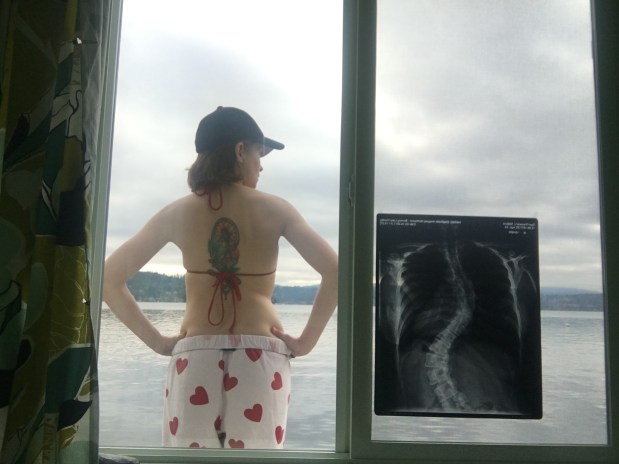
I am participating in Scoliosis Awareness Month by writing this and sharing a picture of me beside an X-ray of my spine. Funny, it was much harder to post a picture of my bare back than to post a picture of my X-rays. I worked through it.

Sending out much love and double hugs to those who live with or support somebody with scoliosis.

Pam Dyer is a Holistic Health Coach who trains people with scoliosis and chronic illness how they can improve sleep, gut health, immunity, and brain function to live full and hurt less.  To book a consult with Pam please email:  butterflysessions@gmail.com